
5 Stocks For Options Trading In November 2026
After Democrats won the midterms, investors also worried that new rules could slow down data center construction. Chip stocks were among the hardest hit. SanDisk (SNDK) fell 22.3% and closed at $806.43.
In this article, we examine five stocks with possible options trading opportunities after the selloff. We look at their key price levels, upcoming earnings and potential strategies, explaining what to watch before considering a bullish or bearish trade.
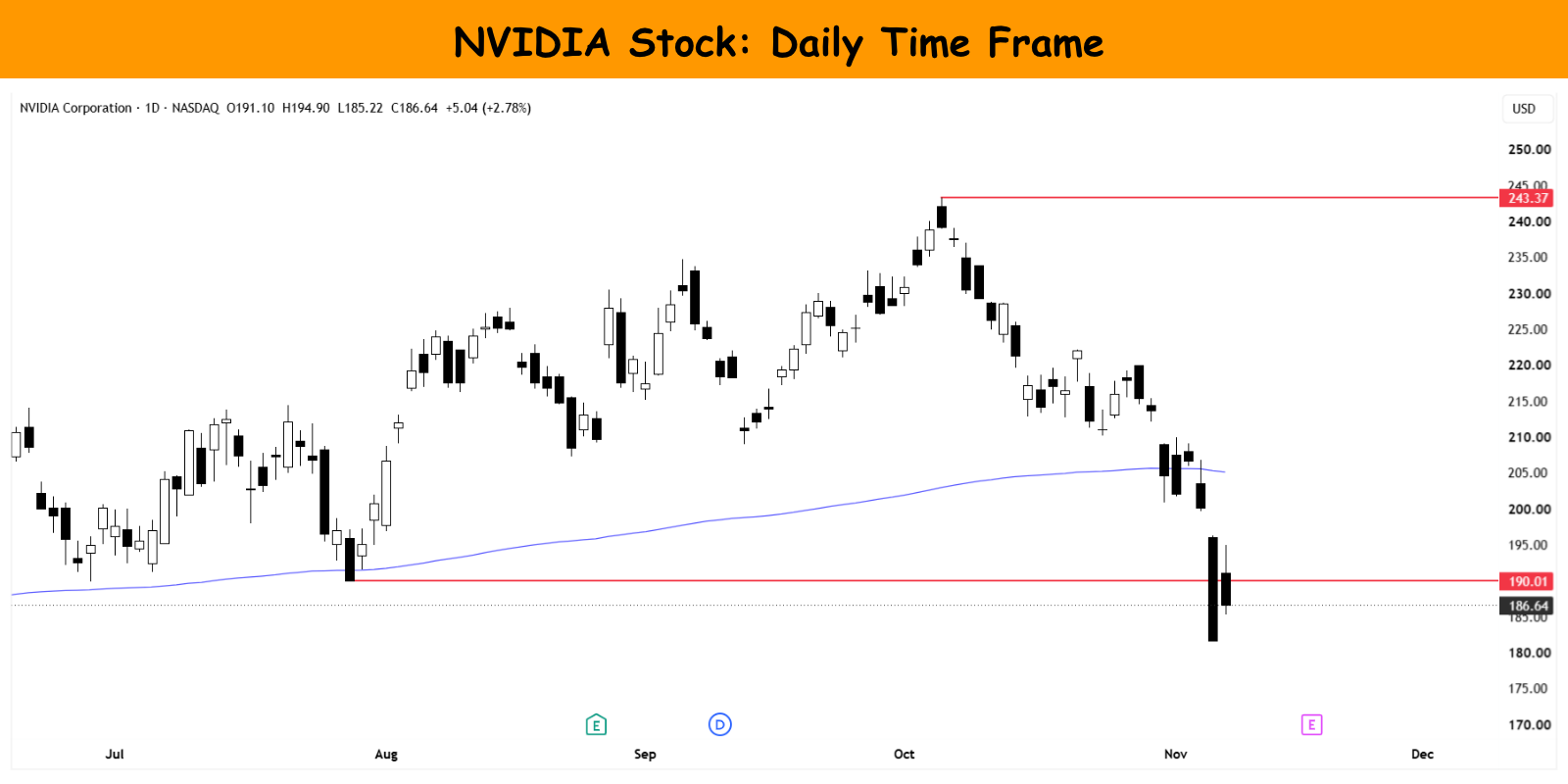
NVIDIA: support breaks as selling pressure increases
NVIDIA fell sharply as investors feared that tighter AI regulation could delay data-centre construction and weaken demand for its chips. Friday’s rebound followed a wider recovery in semiconductor stocks.
The stock closed November 6 at $186.64, below both $190.01 support and EMA 200 near $205. The current setup remains bearish, although a recovery is still possible:
Bearish: further declines below the recent $181–182 low would reinforce selling pressure.
Bullish recovery: reclaiming $190.01 would be an initial improvement. A sustained move above EMA 200 would strengthen the bullish case, with $243.37 a later resistance objective.
Wait for earnings on November 17 after the close. AI chip demand and revenue guidance will help assess whether business growth can support a recovery. Consider puts if selling continues after the report, or calls if results and a recovery above EMA 200 support the bullish scenario.
Make earnings and volatility part of your options trading plan. Explore SteadyOptions membership to learn how traders use them in their strategies and make more informed trading decisions.
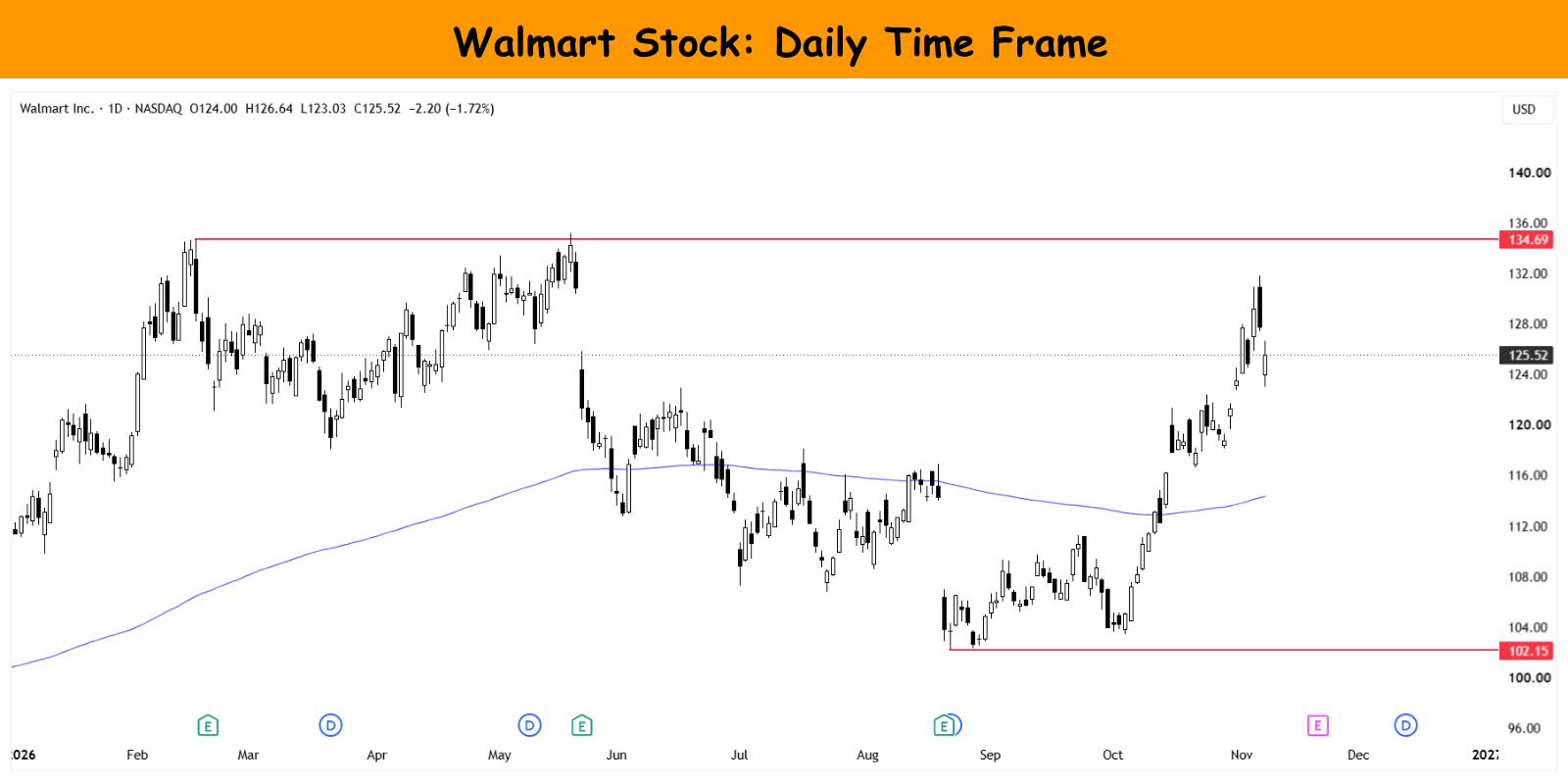
Walmart: earnings will test the recovery
Walmart’s early-November rebound drew support from interest in its expanded Sparky AI shopping assistant ahead of the holiday season. Its previous quarter also delivered 23% global eCommerce growth. These developments support the growth story, but investors still need evidence that stronger digital sales translate into sustained profits.
The stock closed November 6 at $125.52, following a pullback within its October recovery. Price remains above EMA 200, but $134.69 resistance has not yet been tested:
Bullish: buyers defend the pullback and push toward $134.69. A breakout that holds would support considering calls.
Bearish: a future rejection at resistance, followed by renewed selling, could support considering puts. Losing Friday’s $123.03 low would show that the current pullback is deepening.
Wait for earnings on November 19 before the open. Watch comparable sales, eCommerce profitability and holiday guidance. Results that exceed expectations could support another advance; weaker margins or cautious guidance could undermine it. Use the price reaction to confirm the direction.
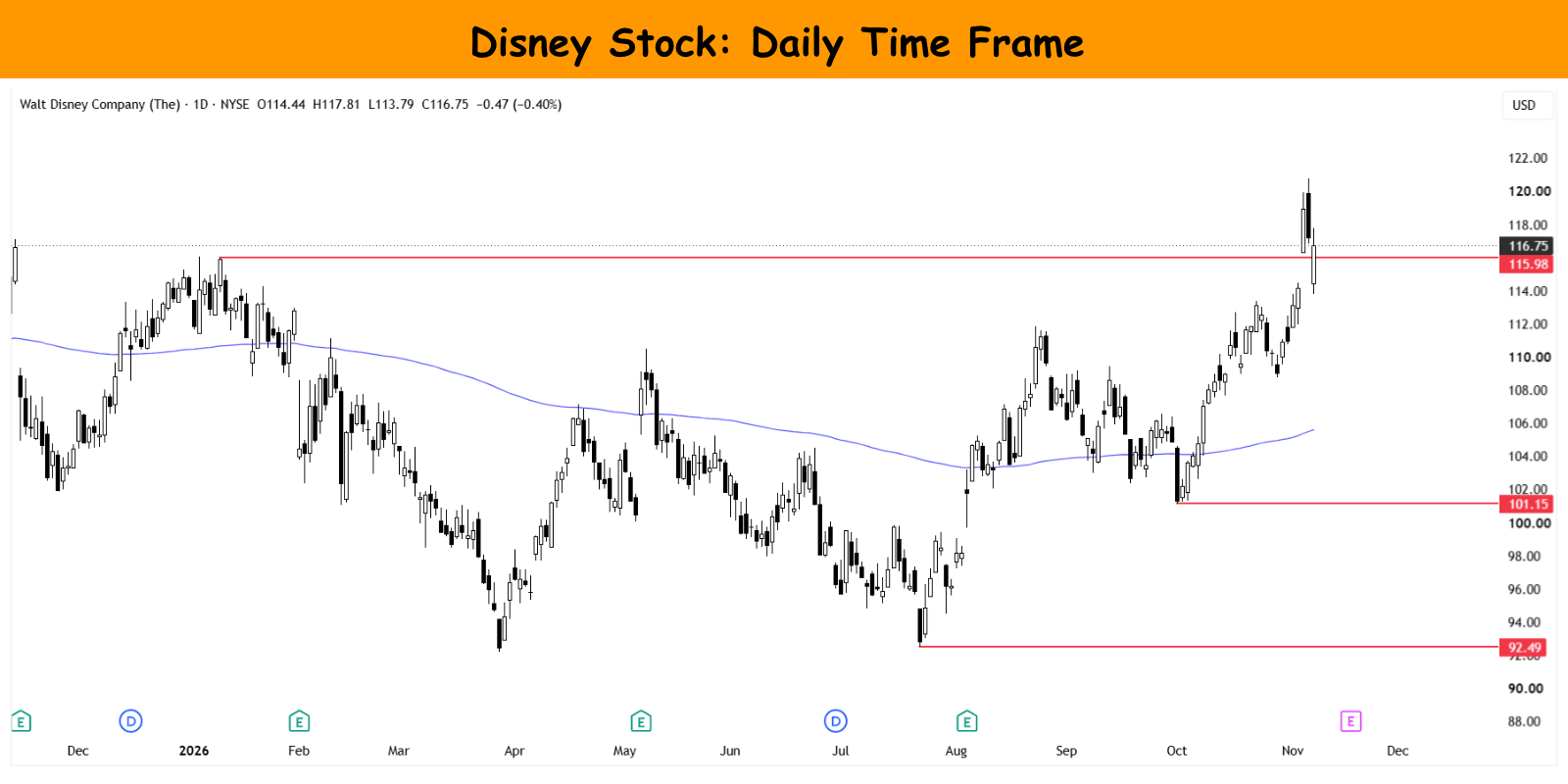
Disney: buyers defend the breakout level
Disney enters earnings with mixed business developments. Its previous quarter benefited from stronger streaming revenue and US theme-park demand. More recently, reports of possible job cuts and cost savings have raised questions about how management will improve profitability while funding growth. Those proposed cuts remain unconfirmed by Disney.
Disney opened November 6 below $115.98, then recovered to close at $116.75. That buying supports a possible retest of former resistance as support:
Bullish: holding $115.98 and continuing higher could bring $120–121 into reach. A break above those highs would put $124 in focus.
Bearish: falling back below $115.98 and failing to recover it would weaken the breakout.
Wait for earnings on November 17 before the open. Streaming profits, parks demand and management’s outlook could determine whether the recovery continues. Strong results followed by buying above $115.98 could support calls. Disappointing results and a failed retest would undermine that opportunity.
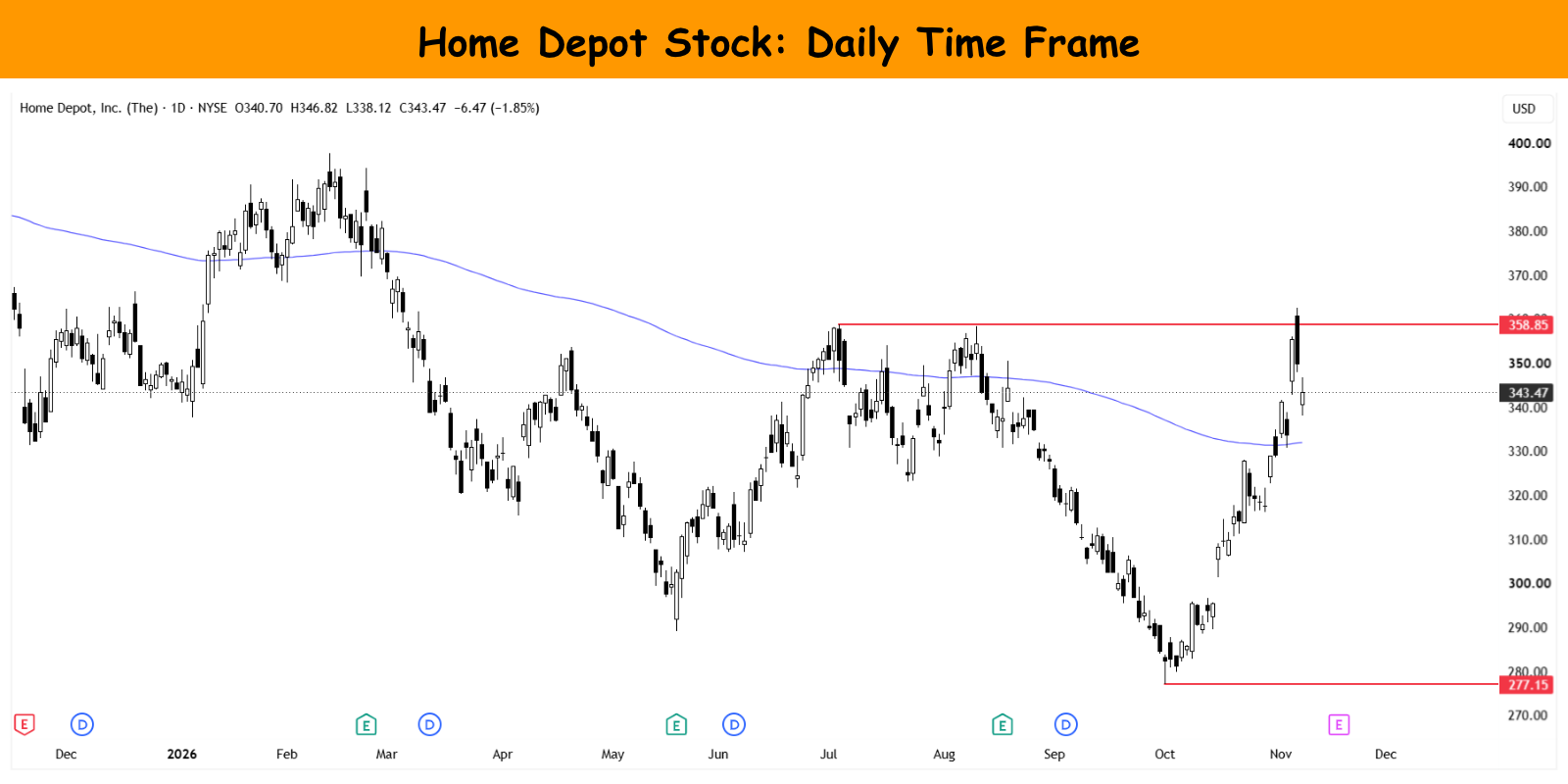
Home Depot: rejection at $358.85 signals selling pressure
Home Depot’s recent rally followed hopes that the election results could bring housing-affordability measures and lower mortgage rates. Those expectations still need to translate into stronger renovation spending. Its previous quarter showed 1.7% comparable-sales growth, leaving earnings an important test of the recovery.
After the recovery, price rejected $358.85 resistance with a strong bearish candle. Price subsequently closed November 6 at $343.47, keeping that selling pressure in focus:
Bearish: a failed bounce and further decline below $338.12 could bring EMA 200 near $330–332 into focus, followed by $320.
Bullish: reclaiming $358.85 and holding above it would weaken the bearish scenario.
Wait for earnings on November 17. Customer transactions, spending on larger projects and guidance will show whether housing optimism has business support. Weak results followed by further selling could support puts or a bear put spread. Stronger results and a sustained breakout would favor reassessing the bullish opportunity.
Amazon: strong cloud growth meets spending concerns
Amazon’s latest earnings presented a mixed picture. AWS revenue rose 39.3% to $46 billion, but overall results missed analysts’ expectations and the holiday-quarter outlook was cautious. Planned capital spending of approximately $220 billion in 2026 also keeps attention on the cost of expanding its AI infrastructure.
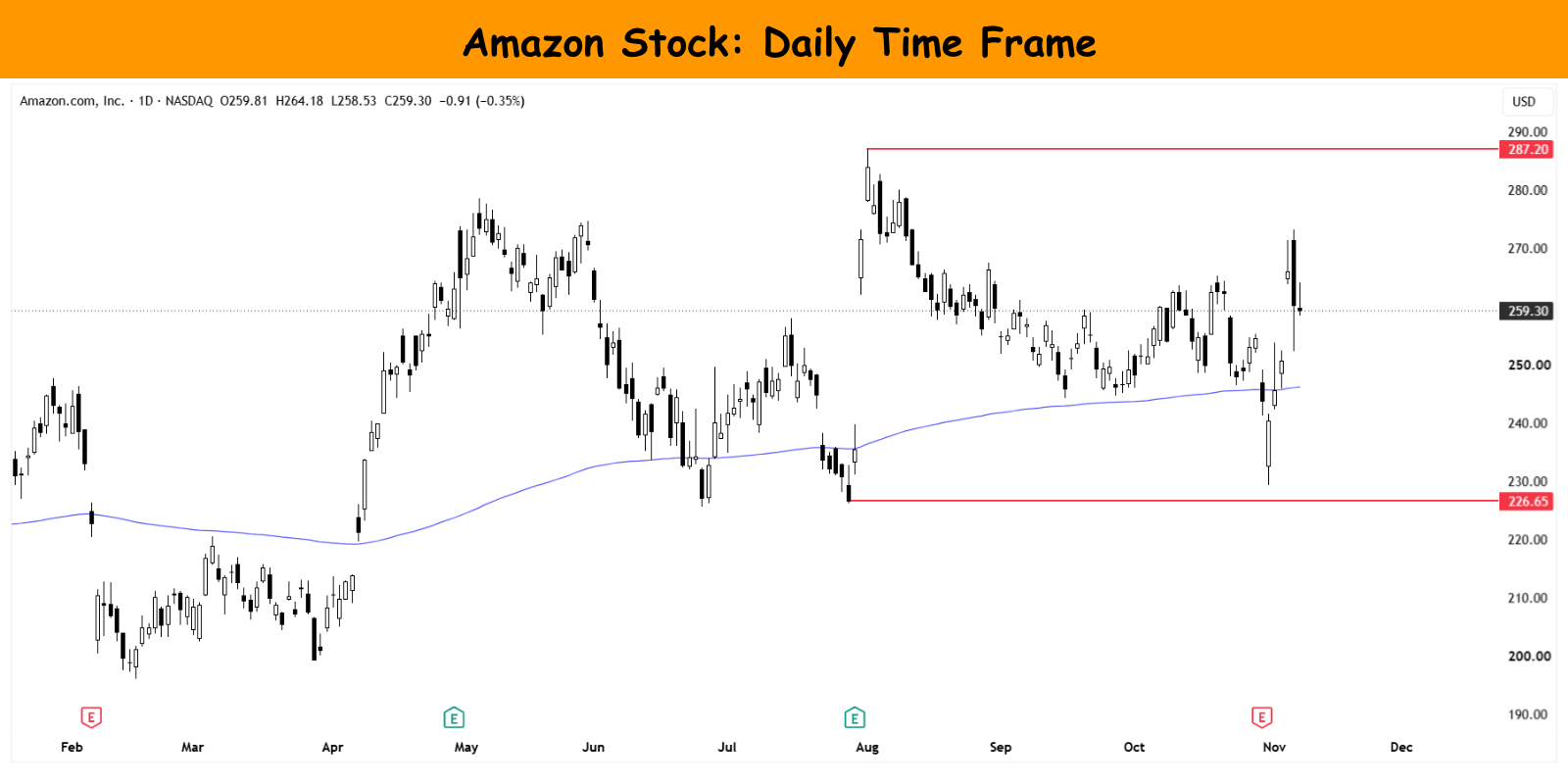
Amazon closed November 6 at $259.30, above EMA 200 near $246 and around the middle of its 226.65–287.20 range. The broader recovery remains intact, but there is no confirmed breakout:
Bullish: holding above EMA 200 and breaking $270–273 could support a move toward $287.20.
Bearish: losing EMA 200 and failing to reclaim it would weaken the recovery.
Sideways: continued trading between support and resistance would leave purchased options exposed to time decay.
Amazon has already reported earnings. Watch subsequent updates on AWS demand, holiday sales and investment spending. A confirmed advance could support calls or a bull call spread, provided the premium leaves sufficient potential reward toward resistance. The current position near the middle of the range calls for patience.
Match the order to the scenario
Price confirmation identifies a possible setup. The options chain determines the cost and deadline for expressing it.
Use a limit order and check the actual bid-ask spread. A widely traded stock can still have an illiquid strike or expiration. Close a purchased option with a sell-to-close order; close a spread by reversing both legs.
Volatility and risk management
Sharp stock moves make options pricing especially important. Implied volatility reflects expected movement embedded in premiums. A rebound in the stock can coincide with falling IV, limiting a call’s gain. After earnings, IV crush can offset the benefit of correctly anticipating direction.
Before entering:
Compare IV with its own history, using a consistent measure.
Choose an expiration that allows time for the expected move.
Check options liquidity, transaction costs and realistic exit prices.
Set a position size that accommodates the potential loss.
A standard 100-share contract quoted at $2 costs $200 before fees. That premium can be lost completely. A planned stop cannot guarantee the exit price, especially across an earnings gap. Spreads also require attention to assignment and expiration.
NVIDIA, Disney and Home Depot report on November 17, followed by Walmart on November 19. Positions across these stocks can concentrate event risk in the same week. Decide before entering whether to close ahead of results or deliberately hold through them.
Options trading goes beyond choosing a stock. You also need the right strategy and a clear plan for managing the trade.
SteadyOptions combines advanced options education with trade ideas, real-time entry and exit updates, and a private trading community. Members also receive explanations behind each trade, position adjustment updates, and guidance on risk management and portfolio allocation.
Its model portfolio made a 48.1% gain from the beginning of 2026 through October, before commissions.
Join SteadyOptions and put a clear plan behind your next trade!
About the author: Naoufal Seddik is a trader and financial writer with over six years of experience in financial markets. He covers forex, indices, stocks, and commodities. He works with the editorial team to create clear, accurate trading and investing content for readers of all experience levels. He is also a Top Rated Plus freelancer on Upwork.
Upwork profile:
https://www.upwork.com/freelancers/~01900fde01a206f244